
Deck Railings in Smithtown, NY
Wood, composite, aluminum and stainless cable systems, fitted so the guard posts carry the sideways load the code actually asks of them.
A Rail Is Structure, Not Trim
Railing is the part homeowners shop on looks and pay for by the linear foot. It is also, alongside the ledger, one of the two connections the trade keeps finding failed on real decks.
Posts Anchored Properly
A guard has to resist two hundred pounds pushed sideways at the top rail. That load is won or lost at the post-to-frame connection, not in the infill.
The Sphere Rule Everywhere
No opening may pass a four-inch sphere. That includes the gap under the bottom rail and between horizontal members, not only the space between balusters.
Height Measured Right
Guards run at least thirty-six inches from the walking surface, and on stairs the measurement comes off the nosing line rather than the tread.
Stairs Get A Handrail
Four or more risers means a handrail, thirty-four to thirty-eight inches up, in a profile a hand can close around. A guard is not a handrail.
Metal Matched To The Site
Near the Sound the hardware goes stainless, and stainless stays with stainless. Mixed metals corrode each other at the joint where nobody looks.
Priced By The Foot
Railing is quoted by linear foot and by post count, so the number is checkable. That is where deck quotes most often diverge without explaining why.
Railing Systems and how each one ages here
Four systems cover almost every Smithtown deck. The deciding factors are upkeep, whether you want to see through it, and how much salt the site takes.
| System | Upkeep | Keeps the view | Suits salt air | Best for |
|---|---|---|---|---|
| Pressure-treated wood | Clean and re-stain on a cycle | No | No | Matching an existing wood deck on a budget |
| Capped composite | Wash it, nothing else | No | Yes | Pairing with a composite deck surface |
| Powder-coated aluminum | Wash it, nothing else | Partly | Yes | Slim posts and a long service life |
| Stainless cable | Wipe down, re-tension now and then | Yes | Yes | Water views and open sight lines |
How a Railing Job Runs
Measure, choose the system, price it by the foot, then fit posts before any infill goes on.
Measure
Linear feet of rail, post count, stair flights, and the height of the walking surface above grade, which decides whether a guard is required at all.
Choose
System picked around upkeep, sight lines and how exposed the site is to salt.
Written Price
Broken out by linear foot, post and stair flight.
Fit
Posts anchored and load-checked first, then rails, infill, stair handrails and the finish caps.

What Do the Rules Say About Railings Here?
The trigger is height. A guard is required once the walking surface sits more than thirty inches above grade, and the town's deck guidance puts it at a minimum of thirty-six inches tall with no opening that will pass a four-inch sphere. That last rule catches the gap under the bottom rail, not only the space between balusters. Stairs are handled separately: a handrail is required at four or more risers, mounted thirty-four to thirty-eight inches above the nosing line. And every guard has to resist two hundred pounds pushed horizontally at any point along the top rail. We fit wood, composite, aluminum and stainless cable systems, on new decks and on existing ones.
- ✓ Guard height and infill
- ✓ Post hold-down hardware
- ✓ Stair handrails fitted
- ✓ Cable and aluminum systems
- ✓ Salt-rated hardware
- ✓ Priced by linear foot
The Connection Under Every Guard Post
A guard that looks solid and gives way when somebody leans on it at height is one of the two failures the trade keeps finding on real decks, and it happens at the post base.
- The load it must takeTwo hundred pounds applied horizontally at any point along the top rail. Not a sustained load, a person losing their balance against it.
- Why a notched post failsA four-by-four notched around the rim joist and held with lag screws frequently cannot develop that load. The trade association names this as a recurring weak point on in-service decks, as an expert judgment rather than as measured data.
- What goes in insteadDedicated hold-down hardware exists for exactly this connection, tying the post through the framing rather than relying on screws biting into end grain.
- The rule people missThe four-inch sphere applies under the bottom rail too. A rail that looks compliant from eye level often is not at ankle level.
- Where salt changes itOn the Sound side that hardware wants to be stainless, and every fastener touching it wants to be the same metal. Mixed metals corrode from inside the joint outward.
Deck Services in Smithtown, NY
Six lines of work, all run by the same crew: new builds, full replacements, composite, repairs, refinishing and railings.
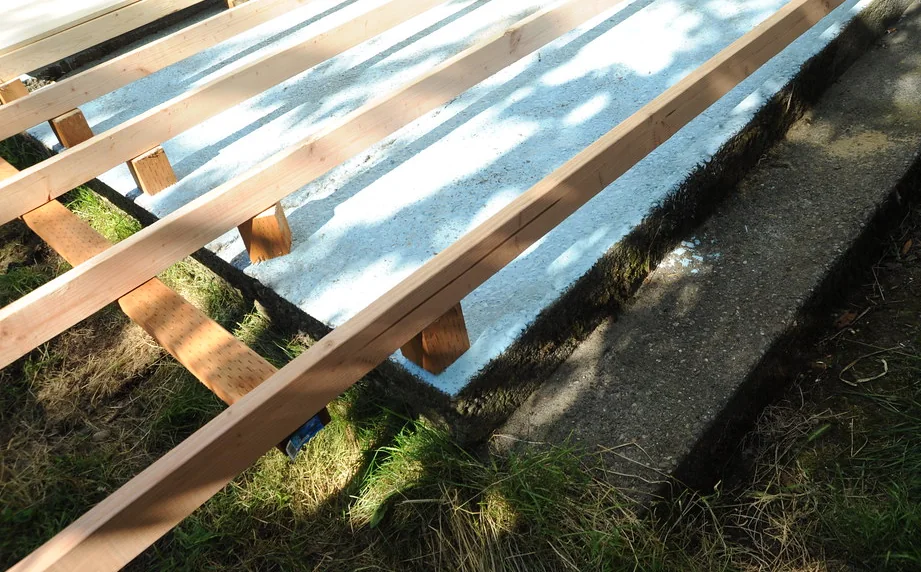
Deck Building
New decks framed, flashed and built to what the town's plan review asks for.
Learn more →
Deck Replacement
Full teardown and rebuild when the frame, not just the surface, has reached its limit.
Learn more →
Composite Decking
Capped composite and PVC boards installed to the board maker's own gapping rules.
Learn more →
Deck Repair
Rot, wobble, loose ledgers and frost-heaved piers found, priced and put right.
Learn more →
Deck Staining
Cleaning, brightening and refinishing on a moisture reading, not a calendar date.
Learn more →
Deck Railings
Wood, composite, aluminum and cable systems, with the posts anchored to take the load.
Learn more →Deck Work Across the Town of Smithtown
Coverage runs the whole Town of Smithtown and past its edges, from Fort Salonga down to Ronkonkoma and east to Stony Brook. Kings Park, St. James and Nesconset are short runs. Prices go in writing first, and a job at the far end of the map costs what one down the road costs.
Deck Railings in Smithtown
Price It By The Foot
Send the linear feet of rail, the number of stair flights and which system you like. The written price breaks out posts, rail and infill separately.